News › Marketing
Countdown Timers for Pre-Orders

Creating urgency can be the difference between a visitor scrolling past your product, or becoming a paying customer. One of the most effective, proven tools to spark that urgency is the countdown timer for pre-orders. But how exactly does a simple clock influence buyer behavior? The answer lies in the psychology of FOMO, the Fear of Missing Out.
We’ll break down why countdown timers work, which psychological triggers they rely on, and practical tips for using them effectively with your pre-order strategy.
⏳ The Psychology Behind Countdown Timers: Why They Work
Humans are wired to respond to scarcity and deadlines. Several psychological principles explain why countdown timers are so effective:
1. FOMO (Fear of Missing Out)
People hate missing opportunities, whether it’s a product, an experience, or exclusive access. When visitors see a timer ticking down, it activates their FOMO response, making them more likely to act immediately rather than delaying a purchase.
Example:
“Only 2 hours left to pre-order our limited-edition sneakers.”
Suddenly, browsing becomes a decision point: buy now or risk losing out entirely.
Learn more about FOMO marketing strategies on Shopify’s blog.
2. Loss Aversion
According to behavioral economics, people feel the pain of loss more intensely than the pleasure of gain. A countdown timer for pre-orders reminds customers that if they don’t act, they’re losing access to something valuable: a product, discount, or early access.
3. Commitment Trigger
Seeing a timer primes customers to make decisions faster. Instead of endless comparisons or hesitation, a visible deadline encourages a micro-commitment: adding the product to their cart, signing up for updates, or completing a pre-order.
🚀 Countdown Timers + Pre-Orders = A Revenue-Boosting Formula
Pre-orders inherently tap into exclusivity. Combining them with countdown timers amplifies urgency and drives conversions. Here’s how Timesact merchants use this strategy effectively:
✔️ Product Launches
Launching a new product? Set your pre-order end date on the product in Timesact, under Products in the variant’s Schedule settings. That date is what closes the pre-order window. Then open the Customer Experience assigned to the product, turn on Enable timer on its Product page, choose Countdown to a date and point it at the same date, so shoppers see the deadline right on the product page. To switch the timer on in your storefront, enable the Timesact App Embed on the theme you are publishing, under Online Store → Themes → Customize → App embeds, and click Save in the theme editor. The embed is set per theme and takes effect once the theme is saved. Pre-order start and end dates are calendar days: each takes effect at midnight, at the start of that day, in the Time zone set in Store settings under Billing & Account, so the day before your end date is the last full day of pre-orders.
Example:
“Pre-orders close in 3 days. Secure yours before they sell out.”
✔️ Restock Events
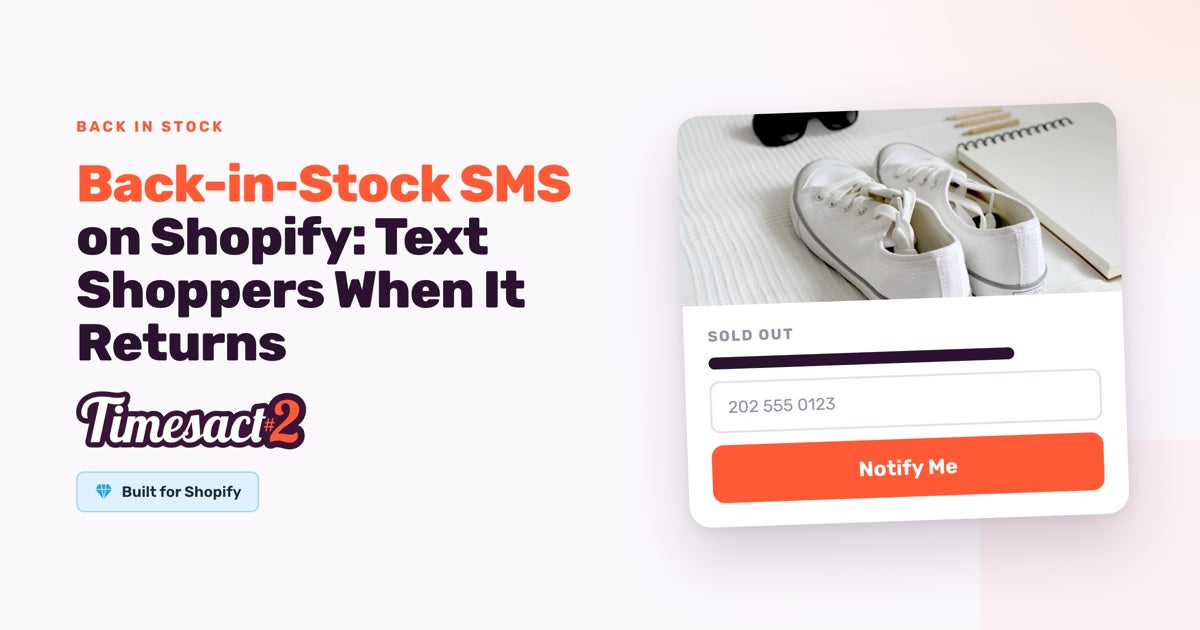
When high-demand products come back in stock, combining back-in-stock notifications with a countdown timer builds excitement and can help speed up sell-through.
✔️ Limited-Time Offers
Pair pre-orders with early-bird pricing. Set the pre-order discount under Pricing in your Customer Experience’s Functionality settings (Percentage off or Fixed amount off) and assign that Customer Experience to the variants you want, and the reduced price applies in the cart at checkout. Set the phase you want to run first, then update the discount on the day you move to standard pricing. Free shipping is set up in Shopify’s shipping rates or discounts and applies to pre-order orders like any other.
Example:
“Pre-order today: early-bird pricing until 31 October.”
🛠 Best Practices for Using Countdown Timers in Your Pre-Order Pages
While timers are powerful, they need to be used thoughtfully. Here are key tips for maximum impact:
✅ Be Authentic
False scarcity damages trust. Only use timers for real deadlines; whether that’s a product restock, early-bird pricing, or limited production runs.
✅ Keep It Visible
Place the timer near the “Pre-Order Now” button so it is easy to spot. Timesact renders it there on the product page, above or below the button, as you choose under Timer placement. If you would like it somewhere else on the page, such as up beside the product description, send our support team the product link and they will position it for your theme.
✅ Match the Brand Style
Keep your timer consistent with the rest of the product page. The timer copy lives in the Customer Experience you assign to the variant, alongside the button text, badge and cart label, so the wording is yours to set. For the visual side, the timer’s Font settings set the font size and text color of its Title, Subheading, Timer values and Labels, and our support team can match the timer and badge to your theme styling on a setup call.
✅ Test & Measure
Track how countdown timers influence your conversion rates. Test different time windows (ex: 24 hours, 3 days, or even a live, ticking-down minutes counter) to see what resonates with your audience.
🎯 Final Thoughts: Turning Urgency into Revenue
Creating urgency means helping customers make confident decisions in a timely manner, without manipulating them. When used transparently and strategically, countdown timers on pre-order pages drive conversions, reduce decision fatigue, and boost revenue.
With Timesact, Shopify merchants can implement pre-order experiences (complete with customizable countdown timers) to turn visitor hesitation into confident action.
Ready to tap into the psychology of FOMO and grow your sales?
Explore how Timesact simplifies pre-orders, back-in-stock notifications, and urgency-driven sales today.
Put a countdown on your next pre-order
Install the app and try a small preorder first, or book a free setup call and we’ll help you set up your first pre-order countdown.
FAQs
Why do countdown timers increase pre-order sales?
Countdown timers trigger urgency and FOMO. When shoppers see time running out, they act faster, turning hesitation into conversions before the pre-order window closes.
How do countdown timers affect buying behavior?
They leverage scarcity and loss aversion. Deadlines remind customers they might miss out, motivating quicker decisions and stronger emotional commitment to purchase.
How should I use countdown timers on pre-orders?
Place them near “Pre-Order Now” buttons or offers. Use them for limited launches and restocks, pointed at the pre-order end date you set on the product in Timesact. Running early-bird pricing alongside it? That discount lives under Pricing in your Customer Experience, and you update it on the day you move to standard pricing.
Can countdown timers hurt credibility?
Yes, fake or endless timers damage trust. Always use real expiry dates and refresh offers honestly to keep urgency credible and conversions sustainable.
How can Shopify merchants add countdown timers to pre-orders?
Timesact lets merchants add countdown timers to product pages through the Customer Experience assigned to the product, with the wording you choose, and the timer’s Font settings set the size and color of its title, subheading, timer values and labels. Enable the Timesact App Embed on the theme you publish and click Save in the theme editor to switch the timer on in your storefront. The pre-order end date you set closes the campaign, and back-in-stock emails go out on their own when inventory returns.
Run this in Timesact
Pre-order, back-in-stock, coming-soon and more — one app, no code.
Install the app →